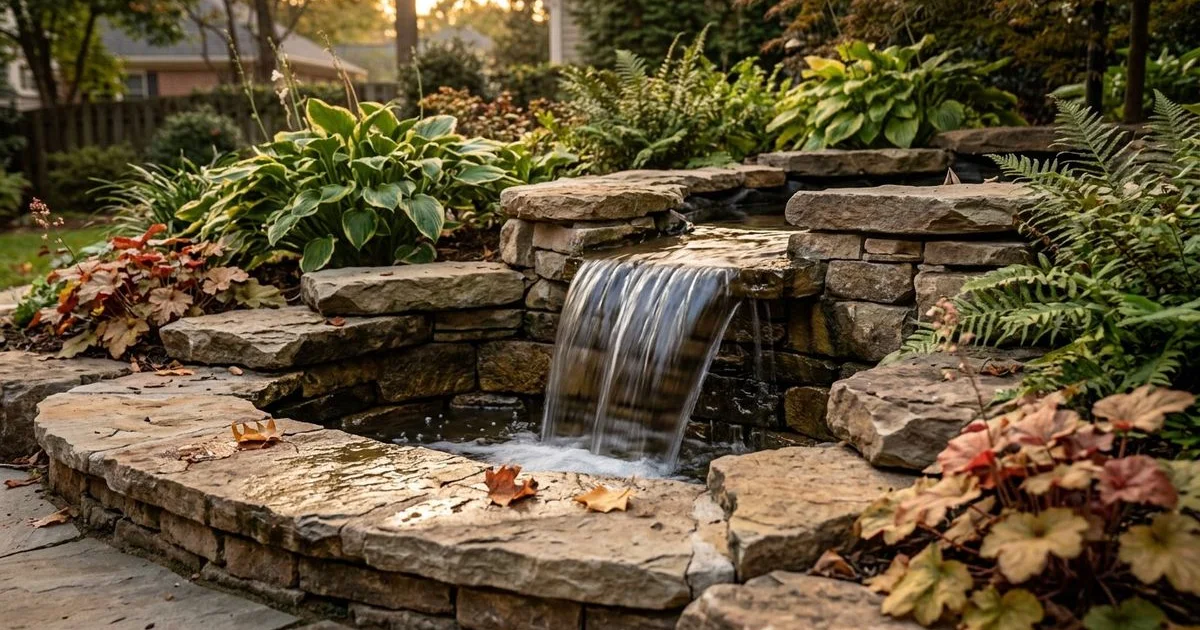
We often see clients treat their water features like standard landscaping, but these are living ecosystems that demand a completely different approach. That distinction changes everything about how you manage your outdoor space.
A water feature is one of the most rewarding additions to any Charlotte backyard. The sound of flowing water and a reflective surface make it an investment that delivers daily enjoyment. But like any mechanical element, a pond or waterfall requires regular care to perform at its best.
Charlotte’s four-season climate creates distinct maintenance demands throughout the year.
Our maintenance team has noticed that hot, humid summers accelerate algae growth while fall brings a deluge of organic debris. Winter introduces freeze-thaw cycles that damage pumps, and spring brings the renewal that sets the tone for the months ahead.
This guide walks through the exact seasonal tasks you need to keep your koi pond or fountain running beautifully.
Spring Maintenance: The Fresh Start
Spring is the most important maintenance season for Charlotte water features. The work you do in March and April establishes the conditions that carry through the rest of the year. Our technicians always tell property owners that a thorough spring startup prevents problems that would otherwise compound through summer.
Inspecting the System After Winter
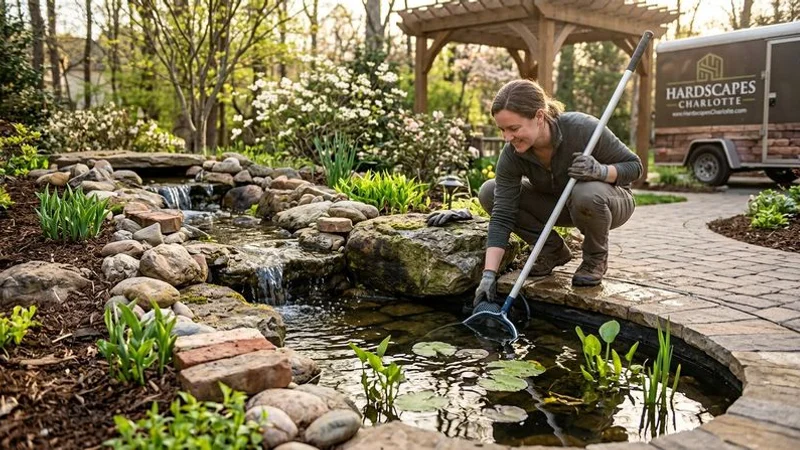
Begin by inspecting every component of your water feature before restarting the pump. Check the liner for any punctures or displacement that may have occurred during winter freezing. We highly recommend using an API Pond Master Water Test Kit right away to check your baseline water chemistry. This specific kit measures pH, ammonia, and nitrites so you know exactly what you are dealing with before adding fish back into the mix.
Look at electrical connections for any signs of moisture intrusion or corrosion. For koi ponds, check the condition of your fish if they overwintered in the pond. Damaged fins or lethargic behavior warrant attention before the active season begins.
Deep Cleaning
Spring is the time for a thorough cleaning that removes the accumulated debris of fall and winter. For koi ponds, this means draining the pond partially, removing accumulated sludge, and rinsing the biological filter media. We always use a high-quality dechlorinator like Seachem Prime when refilling with Charlotte municipal water. This specific product instantly binds up chloramine and toxic ammonia. City water treatments are lethal to fish and beneficial bacteria, making a strong dechlorinator essential.
For pondless waterfalls, remove the decorative stone layer from the basin and clean the pump intake screen. Check the waterfall stone arrangement for any shifting that occurred during winter. Reset any displaced stones to ensure water flows properly.
Restarting Biological Filtration
If you shut down your koi pond’s biological filter for winter, the beneficial bacteria colony will have diminished significantly. Spring startup requires patience as this colony rebuilds. Add a bacterial supplement to jumpstart the process, and monitor ammonia levels closely for the first four to six weeks.
Water temperature is your guide for spring feeding. In Charlotte, pond water typically reaches the 50-degree threshold that signals safe feeding time in mid to late March. We advise clients to start with a cold-water, wheat germ-based formula that is easier for fish to digest. Transition to regular food once water temperatures consistently exceed 60 degrees.
Summer Maintenance: Managing Heat and Growth
Charlotte summers are the most demanding season for water feature maintenance. High temperatures and intense sunlight create conditions that promote algae growth and reduce dissolved oxygen. Consistent weekly attention prevents small issues from becoming major problems.
Algae Management
Algae is the most common summer challenge for Charlotte water feature owners. Prevention is far more effective than treatment. Adequate plant coverage in koi ponds shades the water and competes with algae for nutrients.
Our favorite natural deterrent is barley straw extract, such as the widely available CrystalClear formula. The natural decomposition process releases compounds that safely inhibit algae growth without harming your fish. Place these treatments in the pond in early spring before algae becomes established for the best results.
Water Level Management
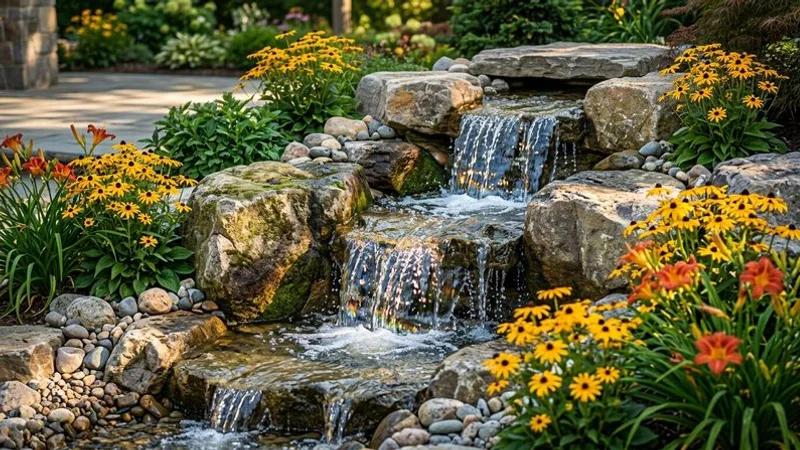
Evaporation during Charlotte summers can lower your water feature’s level by up to two inches per week. In a standard 10-foot by 10-foot pond, that equals roughly 125 gallons of water lost every single week. Low water levels stress pump equipment and concentrate waste products to potentially harmful levels.
Check water levels at least twice per week during summer and top off as needed. We frequently install automatic top-off valves for clients who want a hands-off approach to water level management. When adding municipal water to a koi pond, always use your dechlorinator.
Oxygen Management
Warm water physically holds less dissolved oxygen than cool water. At 80 degrees Fahrenheit, pond water achieves maximum oxygen saturation at just 8.0 milligrams per liter. Koi require a minimum of 5.0 milligrams per liter to survive. The margin for error during a summer heatwave is incredibly slim.
Signs of inadequate oxygenation include fish gasping at the surface. An air pump with a diffuser stone placed on the pond bottom provides supplemental oxygenation. Running the waterfall pump continuously during summer maximizes oxygen exchange and prevents thermal stratification.
Fall Maintenance: Preparing for Leaf Season
Charlotte’s fall foliage creates a significant maintenance challenge for water feature owners. The volume of leaves and pine needles can overwhelm a water feature in weeks if not managed proactively.
Leaf Netting
The single most effective fall maintenance strategy is installing leaf netting over your water feature. In Charlotte, this means placing netting in late October and removing it in early December. The netting catches falling leaves before they decompose and release tannins. Excess tannins rapidly lower your water’s pH and feed algae.
We strongly suggest using a heavy-duty net with a 3/8-inch mesh size. This specific size is tight enough to catch small pine needles but wide enough to allow sunlight through to your aquatic plants. Remove accumulated leaves from the netting regularly to maintain airflow.
Reducing Fish Feeding
As water temperatures drop through fall, koi metabolism slows down. Transition to a cold-water formula when water temperatures drop below 60 degrees. Stop feeding entirely when temperatures consistently fall below 50 degrees.
Overfeeding in fall is a common mistake that creates problems through winter. Uneaten food decomposes on the pond bottom and produces toxic ammonia. Our team routinely sees winter fish loss caused entirely by late-season overfeeding. Follow the thermometer closely during these transition weeks.
Equipment Preparation
Fall is the time to prepare your mechanical systems for winter. Clean all filter media thoroughly because a dirty filter loses efficiency during low-flow months. Inspect the pump for wear and replace any components that show signs of deterioration.
For fountains that you plan to shut down, drain the plumbing lines completely. Standing water in plumbing lines will freeze and crack pipes, leading to costly spring repairs.
Winter Maintenance: The Quiet Season
Winter is the least demanding season for Charlotte water feature maintenance. The occasional hard freeze still requires periodic attention even during the dormant months.
Freeze Protection
Charlotte’s winter temperatures typically drop below freezing on twenty to thirty nights per year. These brief freeze events can easily destroy expensive pumps and plumbing if the system is not prepared.
For koi ponds that operate through winter, keep the pump running. Moving water freezes at a lower temperature than still water. We always deploy a 300-watt floating pond de-icer, such as the K&H Pet Products model, to maintain an open hole in the ice. This opening allows harmful gases to escape the water column. Gas exchange is absolutely essential for overwintering fish.
Monitoring Koi Ponds
Even during winter, koi ponds require weekly visual inspection. Check that the pump is running and the de-icer is functioning. Do not break ice by striking it. Shock waves from striking ice can severely injure dormant fish.
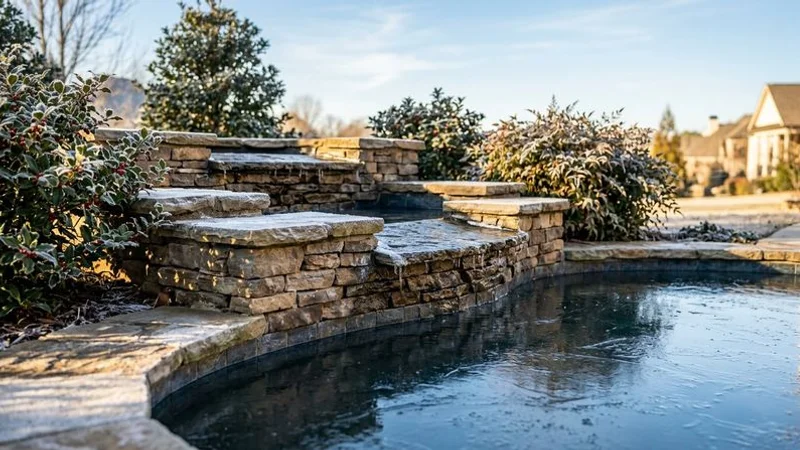
Do not feed fish during winter. Koi enter a natural torpor state when water temperatures drop below 50 degrees. Their digestive systems essentially shut down, making food dangerous to their health.
Monthly Maintenance Checklist
Certain maintenance tasks should be performed on a regular monthly basis to keep your system in optimal condition. We utilize this exact checklist for our monthly service clients:
- Check pump intake screens: Remove debris to prevent clogs that stress the pump motor.
- Test water chemistry: Use your API kit to test ammonia, nitrite, and pH levels.
- Inspect water levels: Top off as needed and apply Seachem Prime to neutralize chlorine.
- Treat algae early: Apply barley extract at the first sign of green water.
- Inspect plumbing: Check all visible connections and valves for slow leaks.
When to Call a Professional
Routine maintenance is well within most homeowners’ capabilities. Certain situations still warrant professional assistance. Persistent water quality problems often indicate a design flaw that requires expert diagnosis.
Major leak detection and repair benefits from professional equipment. According to 2026 pricing data from Angi, professional pond liner leak repairs average between $125 and $800. Attempting to patch a large tear yourself often leads to complete liner failure. A failed repair pushes replacement costs well over $1,000. Any structural repairs to stone work or filtration systems are best handled by contractors who understand water feature engineering.
Protect Your Water Feature Investment
A well-maintained water feature provides decades of enjoyment and adds meaningful value to your Charlotte home. The maintenance commitment is highly manageable when you understand the seasonal rhythm.
We design, build, and maintain water features throughout the Charlotte metro area. If you need assistance with upkeep or are considering adding a new installation to your backyard, schedule a consultation with our team. We would be happy to help you enjoy the full potential of your outdoor water feature.