We often help property owners settle the popular debate of TimberTech vs Trex: Choosing the Best Composite Decking for Your Home.
The conversation almost always comes down to these two dominant players in the industry.
Investing thousands of dollars in an outdoor living space requires looking past the glossy brochures and understanding how these materials actually perform.
Our professional service team has installed both brands extensively across the local metro area. This guide breaks down the real-world performance differences to help you make a smart, data-driven decision.
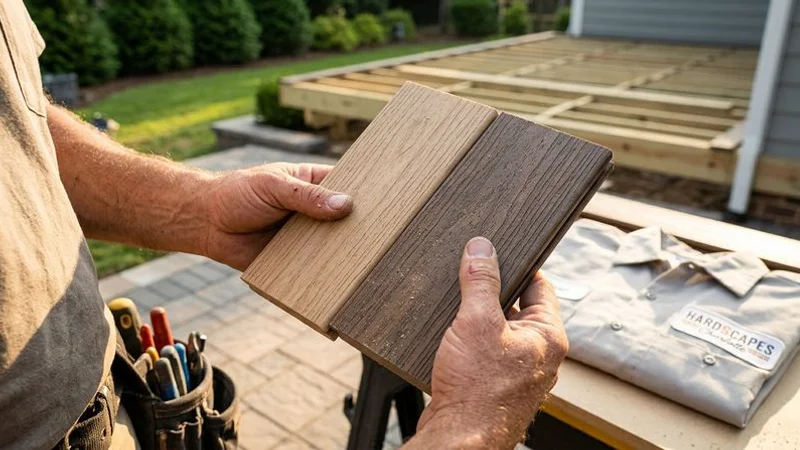
Product Lines Compared
We break this down into specific tiers to help clients set realistic budget expectations. Understanding these categories is essential because comparing a premium board to an entry-level option is not a fair fight.
Trex Product Lines
Our team categorizes Trex decking into four distinct levels based on the latest 2026 product catalogs. Trex Enhance serves as the entry-level line, offering a 25-year warranty and a scalloped bottom to reduce weight. This budget-friendly option provides solid colors and simulated wood grain at a highly accessible price point. We highly recommend the mid-range Trex Select line for its thicker profile and 35-year warranty protection. The premium Trex Transcend line represents the sweet spot for maximum durability and realistic aesthetics.
| Trex Product Line | Warranty Coverage | Key Defining Feature |
|---|---|---|
| Trex Enhance | 25 Years | Scalloped bottom profile |
| Trex Select | 35 Years | Thicker board design |
| Trex Transcend | 50 Years | Premium wood grain finish |
| Trex Signature | 50 Years | Minimalist aluminum aesthetic |
We appreciate the recent 2026 introduction of Transcend Lineage boards. These specific planks feature proprietary SunComfortable technology to aggressively mitigate heat retention. The surface stays noticeably cooler on hot summer afternoons compared to standard composite materials. Our local installations of the ultra-premium Trex Signature line reveal a sleek, aluminum-inspired aesthetic. This minimalist design competes directly with top-tier architectural products.
TimberTech Product Lines
We approach TimberTech products by dividing them into wood-composite and purely synthetic categories. The brand offers two standard composite lines and one advanced PVC option. Here is how the lineup breaks down for residential applications:
- TimberTech EDGE: This entry point competes directly with Trex Enhance and includes a standard 25-year warranty.
- TimberTech PRO: This mid-range composite line features collections like Legacy and Reserve, backed by a 30-year warranty.
- TimberTech Advanced PVC: This premium tier removes wood fibers entirely, offering a 50-year fade warranty plus lifetime structural coverage.
Our clients often gravitate toward the PRO Legacy collection for its hand-scraped, artisanal texture. These composite boards convincingly mimic exotic hardwoods like Tigerwood or Ipe. We consider the Advanced PVC line, formerly known as AZEK, to be the pinnacle of synthetic decking. Because these boards contain absolutely zero organic material, they provide unmatched resistance to moisture and structural mold.
Appearance and Realism
We notice the biggest visual differences between these brands at the premium price points. Entry-level boards from both manufacturers clearly look like standard composite material. They function beautifully, but no guest will mistake them for natural cedar or mahogany. Our experts prefer the mid-range Trex Transcend boards for their deep wood grain embossing and multi-chromatic color blending. TimberTech PRO Legacy counters with a slightly more varied, complex color palette.
We consistently see TimberTech Advanced PVC Vintage boards set the industry standard for sheer realism. Premium visual features include:
- Wire-brushed finishes that remove artificial shine.
- Low-gloss matte appearances for natural light reflection.
- Complex, multi-chromatic color blending within individual boards.
- Deep grain embossing that mirrors authentic hardwood texture.
Trex Signature delivers a fantastic modern look, but industry professionals generally give TimberTech the edge for wood replication. Our high-end installation projects often utilize the Vintage collection to enhance highly visible outdoor entertaining spaces. The visual depth of these synthetic boards easily justifies the higher initial material cost.
Performance in the Local Climate
We constantly evaluate how decking materials handle intense summer heat and heavy spring downpours. The local climate puts exterior surfaces through extreme temperature fluctuations year-round.
Heat Resistance
Our temperature testing reveals significant variations between different board materials during peak sunlight hours. Standard dark composite boards can easily reach surface temperatures of 130 to 150 degrees Fahrenheit. Independent 2026 data shows these pure PVC boards stay 10 to 15 degrees cooler than traditional wood-composite blends, making TimberTech Advanced PVC our top choice for superior heat dissipation in unshaded backyards.
We are impressed by the recent thermal results of the Trex Transcend Lineage collection. Manufacturer specifications indicate their proprietary heat-mitigating technology keeps boards up to 35 degrees cooler than standard Trex offerings. Lighter color selections in either brand will always provide the most comfortable barefoot experience.
Moisture and Mold Resistance
We emphasize moisture protection because regional humidity actively promotes mold growth on outdoor surfaces. Trex manufactures their composite boards using roughly 95 percent recycled wood fibers and plastics. To protect this wood content, the company seals the boards using specific methods:
- Trex applies a protective polymer shell to all four sides of the board.
- This comprehensive capping prevents water absorption from the top, bottom, and grooved edges.
- The fully encapsulated design blocks moisture entry from the damp substructure below.
Our crews appreciate this comprehensive capping approach for long-term deck health. TimberTech PRO boards utilize a different strategy, capping the top and bottom but leaving the grooved edges partially exposed. This design allows trapped moisture to escape if it enters the core, though it technically offers less immediate barrier protection. We recommend TimberTech Advanced PVC to completely eliminate any long-term moisture risk. Because these synthetic boards contain zero organic wood fiber, they simply cannot rot, warp, or support structural mold.
Fade Resistance
Our inspections of older installations show that modern capping technology drastically reduces color fading. Both manufacturers now offer comprehensive fade and stain warranties that guarantee the color will remain stable for decades. We find the 50-year fade and stain warranty on Trex Transcend and Signature lines highly reassuring. TimberTech matches this exact coverage duration on their Advanced PVC products.
Our designers always remind clients that darker colors will naturally exhibit a slight, uniform lightening over the first few months. This initial weathering from UV exposure is expected and factored into the manufacturer warranty guidelines. Selecting a shade slightly darker than your final desired color can help account for this natural settling process.
Warranty Comparison
We advise every client to read the fine print, as warranty structures vary significantly by product tier. The industry standard has shifted dramatically over the past few years to offer much longer coverage.
| Brand & Product Line | Structural Warranty | Fade & Stain Warranty |
|---|---|---|
| Trex Enhance | 25 Years | 25 Years |
| Trex Select | 35 Years | 35 Years |
| Trex Transcend | 50 Years | 50 Years |
| TimberTech PRO | 30 Years | 30 Years |
| TimberTech Advanced PVC | Lifetime | 50 Years |
Our team appreciates that Trex provides comprehensive coverage that is fully transferable to a second homeowner. This transferability feature adds tangible value if you plan to sell your property in the future. We also highlight the standout lifetime structural warranty offered exclusively on TimberTech Advanced PVC boards. Registering your new deck immediately after the final inspection is the absolute best way to ensure your investment remains protected.
Installation Considerations
We evaluate these materials daily from a construction perspective, and the handling characteristics differ noticeably. Trex boards feature a slightly softer core, making them exceptionally easy to cut with standard woodworking blades. Our carpenters switch to specialized blades when cutting TimberTech Advanced PVC to prevent the plastic from melting. These pure PVC boards are up to 30 percent lighter than dense composites, reducing physical fatigue during large-scale builds.
We rely on hidden fastener systems to achieve a clean, professional, screw-free surface. Fastener requirements include:
- Trex utilizes the Trex Hideaway Universal Hidden Fastener with a durable glass-filled nylon clip.
- TimberTech requires their proprietary CONCEALoc hidden fasteners for strict warranty compliance.
- Both systems demand the underlying framing strictly adheres to a 16-inch on-center joist spacing.
Our recent projects show excellent compatibility with matching railing systems from both manufacturers. Upgraded aluminum railing lines from Trex now compete directly with TimberTech’s premium architectural profiles.
Price Comparison in the US Market
We track material costs closely to provide accurate estimates for upcoming construction projects. Pricing fluctuates based on supply chains, but the 2026 figures reveal a clear tier structure across the United States. Our estimates below reflect the average installed cost per square foot, including materials, labor, and standard substructure framing.
- Entry-Level Budget: Trex Enhance and TimberTech EDGE generally run $15 to $25 per square foot installed.
- Mid-Range Value: Trex Select and TimberTech PRO range from $25 to $35 per square foot.
- Premium Investment: Trex Transcend and TimberTech Advanced PVC start around $60 and can reach $80 per square foot.
We tell clients that upgrading from an entry-level to a premium board on a standard 300-square-foot deck adds several thousand dollars. This cost difference directly reflects the advanced heat mitigation technology, realistic textures, and extended warranty periods.
Which Brand Should Homeowners Choose?
Our years of field testing lead to a few definitive recommendations for your upcoming property upgrade. The performance gap between these two industry giants is closer than ever before. We know you will secure a beautiful, long-lasting surface regardless of which mid-range or premium option you select. Here is a quick breakdown to guide your final decision:
- Choose Trex if you prioritize proven reliability, comprehensive four-sided moisture capping, and strong eco-friendly manufacturing.
- Choose TimberTech if achieving the most authentic hardwood look is your primary objective.
Our team notes that the 95 percent recycled content of Trex appeals strongly to many environmentally conscious property owners. TimberTech Advanced PVC justifies its premium price tag through unparalleled active heat resistance and total immunity to moisture damage.
See Both Brands in Person
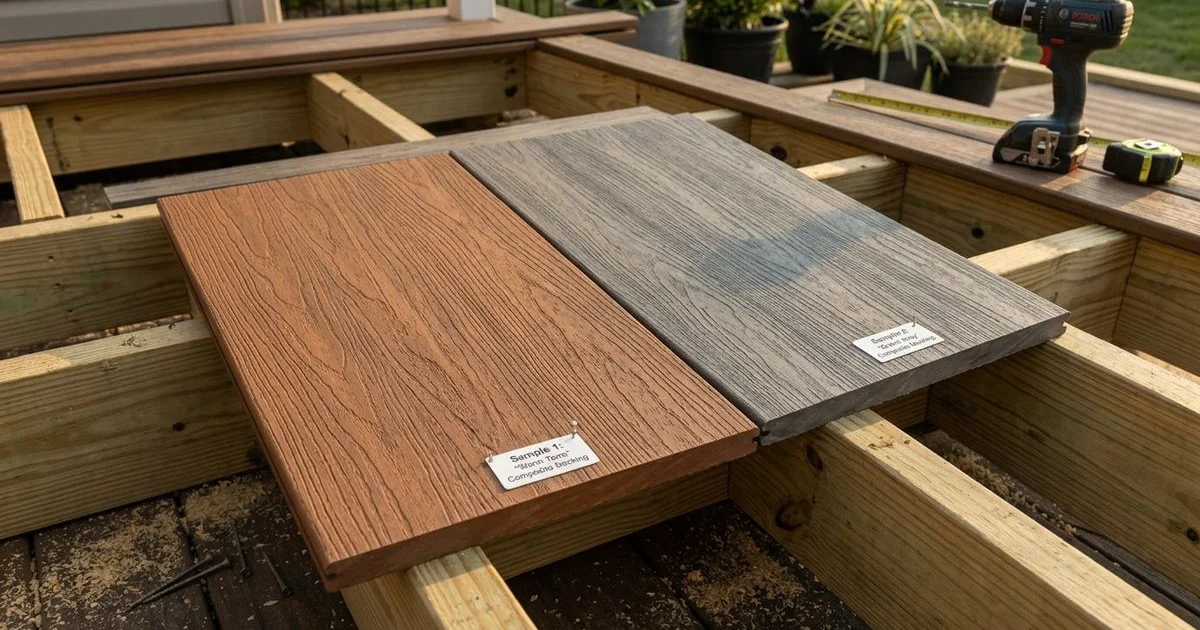
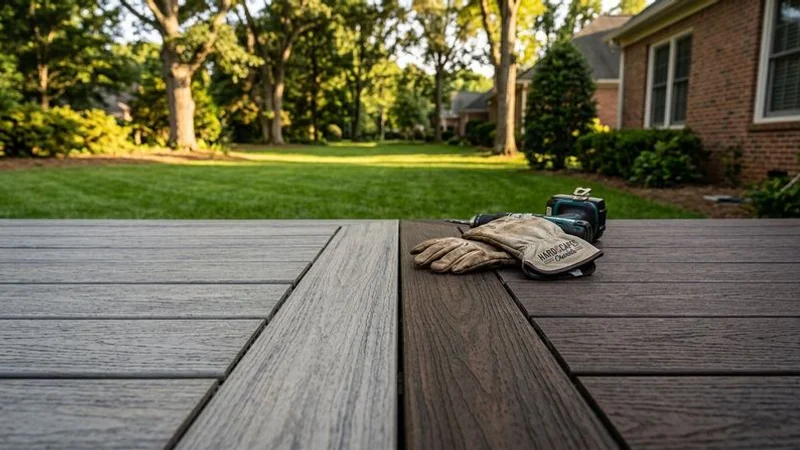
We always recommend inspecting physical samples before committing to a final color or texture.
Holding the boards in natural sunlight reveals the true depth of the grain patterns and the subtle color variations. Answering the question of TimberTech vs Trex: Choosing the Best Composite Decking for Your Home gets much easier when you see the products side-by-side.
Our Charlotte deck building team installs both TimberTech and Trex products with precision and care. Reach out to schedule a consultation, and we will bring the latest 2026 decking samples directly to your property. Let us help you design an outdoor living space that delivers decades of lasting value and comfort.