Clients frequently present us with a specific debate, Stamped Concrete vs Paver Patio: Which Survives Charlotte Weather Better? Our professional service team has analyzed outdoor surfaces across Charlotte for years to answer this exact question. The combination of unpredictable winters and intense summer heat creates a unique battleground for hardscaping materials.
We routinely evaluate the long-term effects of expansive Carolina red clay on patio structures. This specific climate tests exterior installations in ways that catch many property owners off guard.
We see surface failures frequently because the chosen material simply cannot handle the local environmental stress.
Making the right selection requires looking past the initial design and understanding how these components perform under pressure. The details below provide a clear, factual comparison to help you plan your upcoming project intelligently.
How Charlotte Weather Affects Each Material
The local environment dictates the lifespan of any hardscape project. We focus heavily on three major environmental factors that consistently degrade outdoor installations.
Freeze-Thaw Impact
Charlotte typically experiences 40 to 60 freeze-thaw cycles per winter from November through March. We observe the devastating effects of this cycle every spring during our property inspections. Each cycle allows moisture to penetrate surface pores, freeze, expand, and then thaw again.
Water expands by roughly 9 percent when it turns to ice. This expansion exerts incredible hydrostatic pressure inside any rigid material. Stamped concrete is a continuous, rigid slab, which makes it highly vulnerable to this specific type of stress.
We watch microscopic imperfections turn into major structural failures over just a few seasons. Once water enters a hairline crack and freezes, the damage accelerates exponentially year after year:
- Year 1-2: Invisible micro-fissures form during the first hard freezes.
- Year 3-5: Cracks become visible to the naked eye as surface spalling begins.
- Year 6-8: Fissures widen enough to collect debris and require structural patching.
Pavers handle these exact same temperature swings quite differently. The joints between individual concrete pavers act as built-in expansion points across the entire patio surface. Our installations show that these flexible joints easily accommodate the slight ground shifts caused by freezing moisture.
Heavy Rainfall and Drainage
This region receives roughly 43 inches of rain annually, often arriving in intense, concentrated downpours. We factor this heavy water volume into every project design to protect the underlying property foundation. Stamped concrete features a sealed surface that sheds water rapidly, requiring an aggressive slope to manage runoff.
If the underlying Carolina clay shifts and alters that slope, water will quickly begin pooling on the concrete surface. We constantly see improperly graded concrete slabs directing storm runoff directly at residential foundations.
“Proper water management is the single most critical factor for hardscape longevity in the Southeast. Systems that absorb water rather than redirecting it always perform better over time.”
Paver systems possess an inherent advantage in managing this heavy rainfall. The sand-filled joints allow a calculated amount of water infiltration, which significantly reduces the volume of surface runoff. We frequently install permeable paver systems capable of infiltrating over 100 inches of water per hour for properties with severe drainage issues.
UV Exposure and Heat
The summer sun in North Carolina places intense stress on surface color treatments. Our team measures surface temperatures regularly, and dark stamped concrete frequently exceeds 140 degrees Fahrenheit in direct August sunlight. This material relies on a surface-applied color hardener that takes the full brunt of this solar radiation.
UV exposure rapidly degrades these top-layer chemical treatments. We find that without strict resealing every 24 months, stamped concrete develops a chalky, faded appearance.
Concrete pavers utilize integral color pigments mixed directly into the concrete during the manufacturing process. We prefer this method because the color extends completely through the core of the stone.
| Material Characteristic | Stamped Concrete | Concrete Pavers |
|---|---|---|
| Color Application | Surface-level hardener | Integral, through-body pigment |
| UV Resistance | Low (fades rapidly) | High (graceful, uniform aging) |
| Heat Retention | High (often hot underfoot) | Moderate (lighter colors stay cooler) |
Both surfaces absorb heat during peak summer months. We note, however, that lighter-colored pavers with textured surfaces consistently feel much cooler underfoot than dark, sealed concrete slabs.
Installation Differences That Matter in Charlotte
Proper ground preparation is critical to any successful patio project. The specific requirements vary drastically between these two materials.
Base Preparation
The local region sits on Ultisols, commonly known as Carolina red clay, which expands significantly when wet. We must address this expansive soil properly, or any surface placed above it will eventually fail. Stamped concrete relies entirely on a highly compacted gravel sub-base to prevent the rigid slab from snapping.
Achieving the necessary stability for concrete requires aggressive excavation and perfect soil conditions. We mandate a specific foundation process for clay soils to prevent the wet earth from migrating upward and compromising the structural integrity:
- Complete excavation of unstable topsoil.
- Installation of heavy-duty geotextile fabric.
- Minimum 4 to 6 inches of compacted crushed stone.
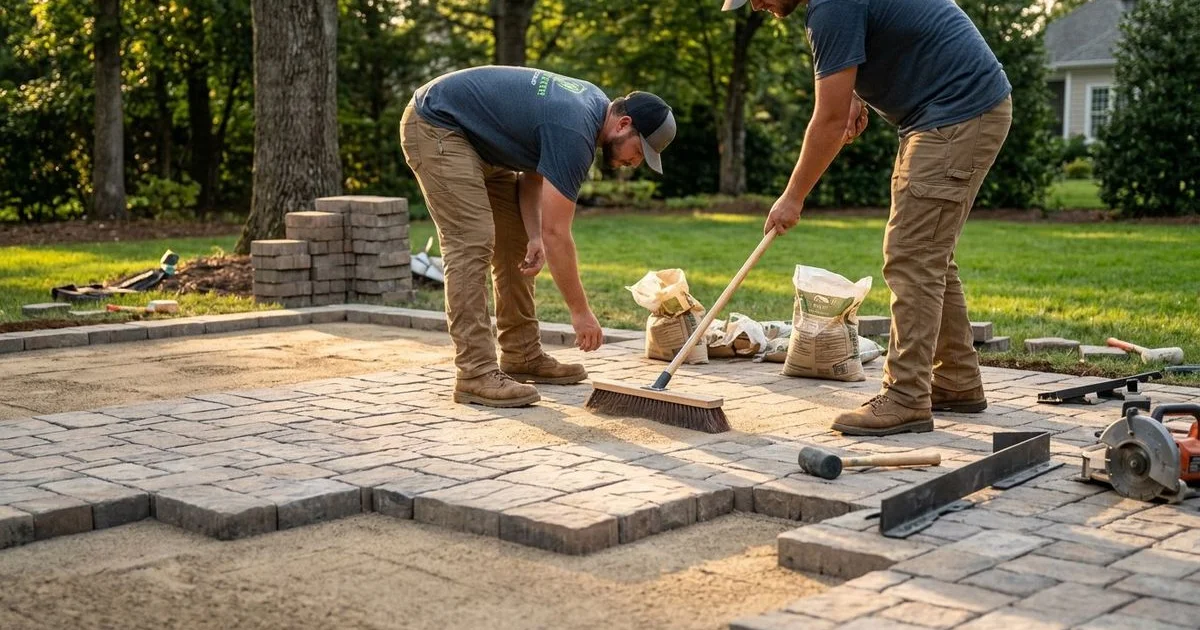
Paver patios utilize a layered, flexible installation method. We install a compacted aggregate base, a precise bedding layer of angular sand, and then the individual paving stones. This interlocking system absorbs minor ground movement without transferring that stress into visible surface cracks.
Construction Timeline
Concrete pouring demands absolutely perfect weather conditions during the installation window. We must halt concrete installations if there is even a slight chance of rain, as precipitation ruins the stamping and curing process. Standard concrete also requires up to 28 days to reach its full structural PSI strength.
Paver installation completely eliminates this weather-related scheduling risk. We can pause paver construction during a rainstorm and resume immediately after without damaging the final product.
Long-Term Costs: The Full Picture
Evaluating the initial price tag provides an incomplete picture of your total financial commitment. We always encourage property owners to calculate the expected maintenance and repair costs over a full twenty-year cycle.
Initial Installation
Standard stamped concrete currently averages between $10 and $20 per square foot installed in the local market. A standard 300-square-foot stamped concrete project requires an initial investment between $3,000 and $6,000.
Quality concrete pavers cost roughly $12 to $25 per square foot for professional installation. We see a 300-square-foot paver project landing in the $3,600 to $7,500 range. For detailed pricing on specific materials, review our complete patio cost guide for Charlotte.
Ongoing Maintenance Costs
Sealed concrete requires mandatory chemical resealing every two to three years to prevent moisture intrusion and color loss. We typically see professional resealing services charging $1.50 to $3.00 per square foot. This recurring maintenance adds up to $3,000 to $9,000 in additional costs over a twenty-year period for an average patio.
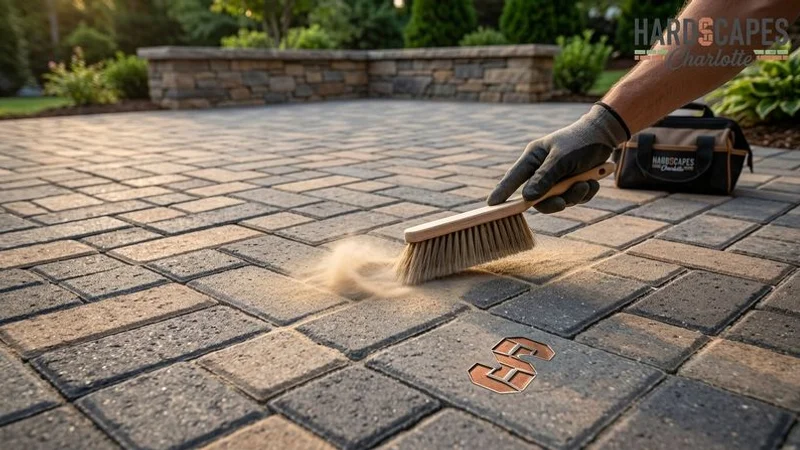
Paver maintenance is significantly less demanding and far less expensive. We recommend simple polymeric joint sand touch-ups, which require very few materials and hold up for 10 to 15 years.
Repair Costs
Repairing a rigid slab is expensive, highly disruptive, and aesthetically disappointing. We find that surface patches on stamped concrete never match the original color due to UV fading on the older sections. A major crack repair often forces the homeowner to demolish and replace entire sections, costing $1,500 to $4,000.
Damaged pavers require a remarkably simple and inexpensive fix. We can lift a stained or cracked individual stone out of the matrix and drop a new one right into its place.
Total 20-Year Cost of Ownership
When you track the financial data over two decades, the higher initial cost of pavers disappears entirely. We compiled the typical expenses for a standard 300-square-foot project to illustrate the true financial impact.
| Expense Category | Stamped Concrete (20 Yrs) | Paver System (20 Yrs) |
|---|---|---|
| Initial Installation | $4,500 (Average) | $6,000 (Average) |
| Routine Maintenance | $6,000 (Resealing cycles) | $2,400 (Cleaning/Sand) |
| Estimated Repairs | $3,500 (Crack patching) | $400 (Spot replacement) |
| Total Projected Cost | $14,000 | $8,800 |
Aesthetic Comparison
Material aesthetics play a massive role in property value and daily enjoyment. We evaluate how these materials look on day one versus how they look ten years down the road.
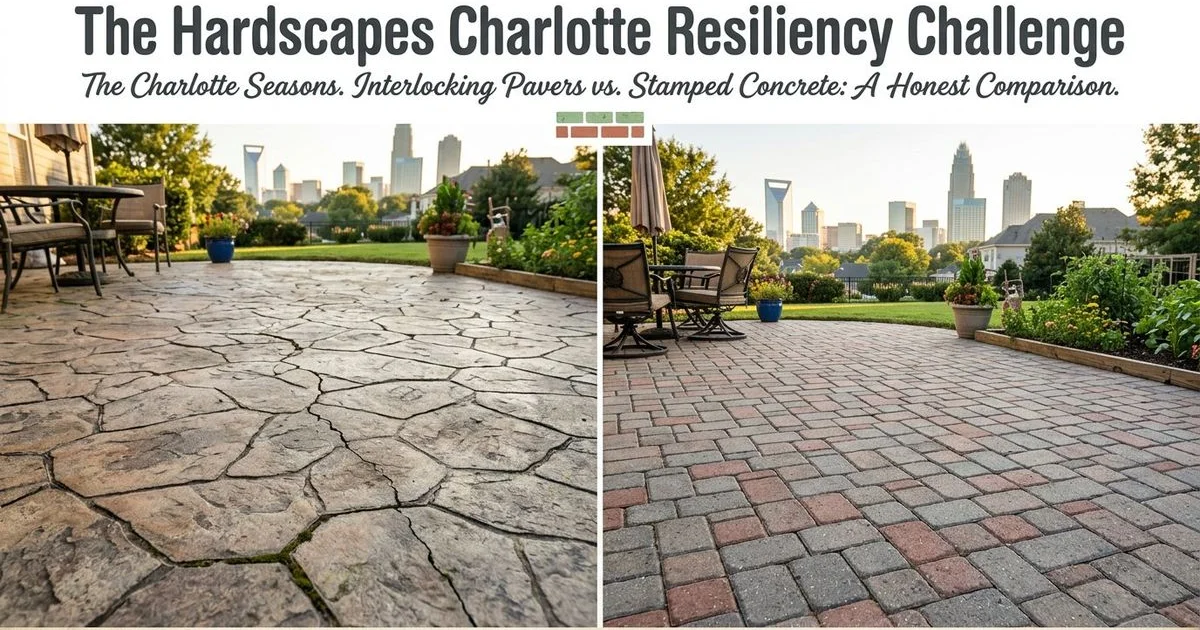
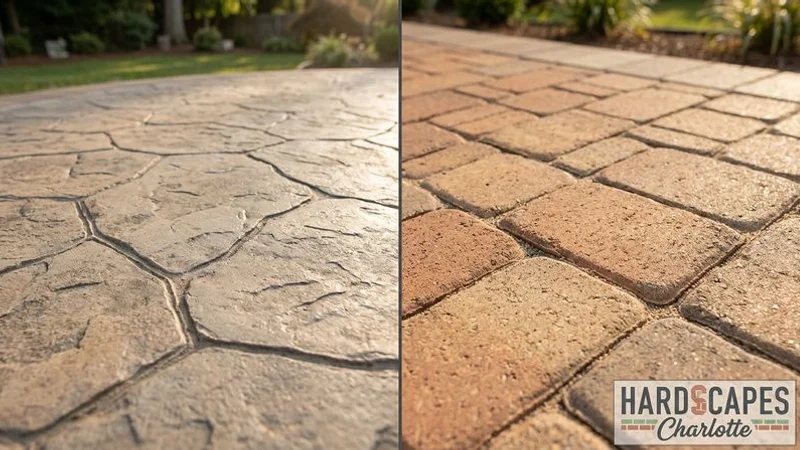
Stamped concrete presses a pattern into wet cement to mimic premium materials like natural slate or wood planks. We find this initial look quite appealing, but the stamped joints lack actual depth and shadow lines. As the surface seal wears thin, the faux pattern loses its definition and begins to look artificial.
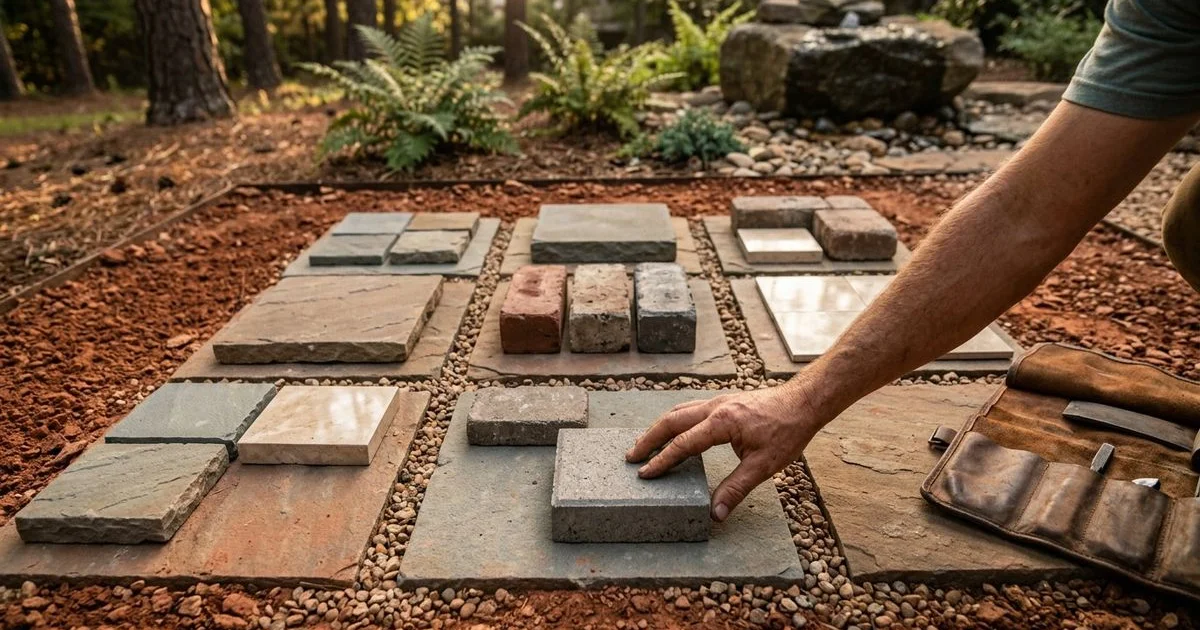
Pavers deliver genuine, three-dimensional texture because each stone is an individual unit. We utilize modern manufacturing options to provide exact geometric shapes, from contemporary smooth slabs to rustic tumbled cobblestones.
The modular nature of pavers allows for incredible design creativity. We frequently build the following custom features using interlocking stones:
- Contrasting border ribbons in dark charcoal or espresso.
- Herringbone inlay patterns for high-traffic zones.
- Curved, sweeping edges that seamlessly follow natural landscaping.
- Integrated seating walls built from matching retaining wall blocks.
Safety Considerations
Surface traction is a critical factor for any outdoor area exposed to frequent rain. We prioritize safety standards when designing spaces for families and commercial properties.
Standard stamped concrete features a slick, continuous surface that becomes notoriously hazardous when wet. We can add grit to the acrylic sealer, but this anti-slip additive wears away quickly under normal foot traffic. Standard sealed concrete frequently fails the ANSI A326.3 dynamic coefficient of friction safety test for wet areas.
Paver systems naturally provide excellent grip due to their textured finishes and the micro-ridges created by the joint lines. We strictly specify pavers with high slip-resistance ratings for specific hazard zones:
- Uncovered dining areas
- Pool surrounds
- Sloped walkways
Environmental Impact
Modern property management requires a focus on sustainable water practices. We work closely with local guidelines to ensure our projects minimize negative environmental impacts.
Charlotte enforces strict Built-Upon Area limits to control stormwater runoff into local municipal drains. We install permeable paver systems to help property owners reduce their impervious surface footprint and avoid potential stormwater fees. These systems filter pollutants naturally through the crushed stone base before the water reaches the water table.
Rigid concrete slabs offer no environmental flexibility. We must demolish and send damaged concrete directly to a landfill, whereas pavers can be cleanly lifted, stacked, and reused indefinitely.
The Verdict for Charlotte Homeowners
Property owners constantly debate Stamped Concrete vs Paver Patio: Which Survives Charlotte Weather Better? Local environmental pressures heavily favor flexible, modular building materials. We see pavers outperforming poured slabs in almost every verifiable metric over a twenty-year timeline.
The heavy clay soils crack rigid structures, while constant moisture degrades surface sealants. We find that the maintenance demands of stamped surfaces quickly turn an affordable project into an expensive liability.
Pavers flex with the native ground, manage stormwater efficiently, and require minimal long-term investment. The superior durability and straightforward repair process make interlocking stones the smartest financial choice for local properties.
Get Expert Advice for Your Patio Decision
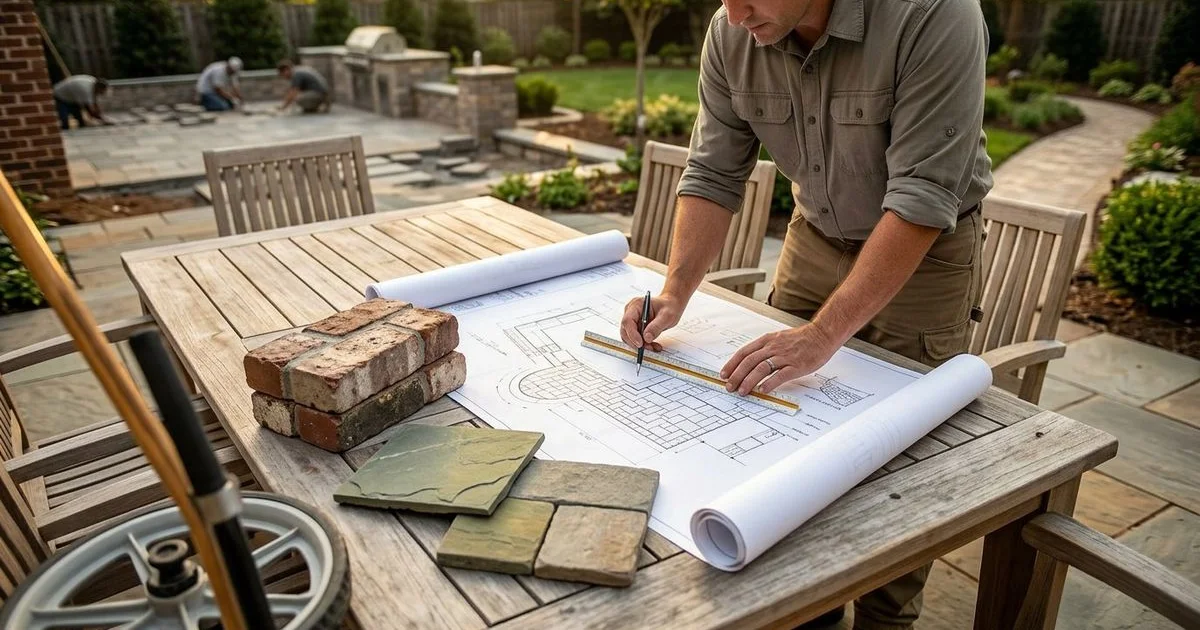
If you are still weighing Stamped Concrete vs Paver Patio: Which Survives Charlotte Weather Better?, selecting the right material requires assessing your specific soil conditions and drainage needs. The installation crews at our company have completed thousands of square feet of hardscaping across the metro area. We understand exactly how these materials behave under stress.
A professional property evaluation allows us to discuss your specific goals and provide clear data on what works best for your yard. Schedule a free design consultation with our patio specialists today and secure a lasting foundation for your home.