We know the frustration of watching a massive backyard investment fall short of expectations. Reviewing the 5 Outdoor Kitchen Design Mistakes Charlotte Homeowners Should Avoid is the best way to protect your budget.
Our team has seen beautiful spaces become completely unusable because of a few structural oversights.
This happens constantly when basic design principles are ignored. We know that the difference between a daily-use cooking station and a deteriorating patio ornament comes down to planning.
Let’s look at the data behind these common failures and explore a few practical ways to respond.
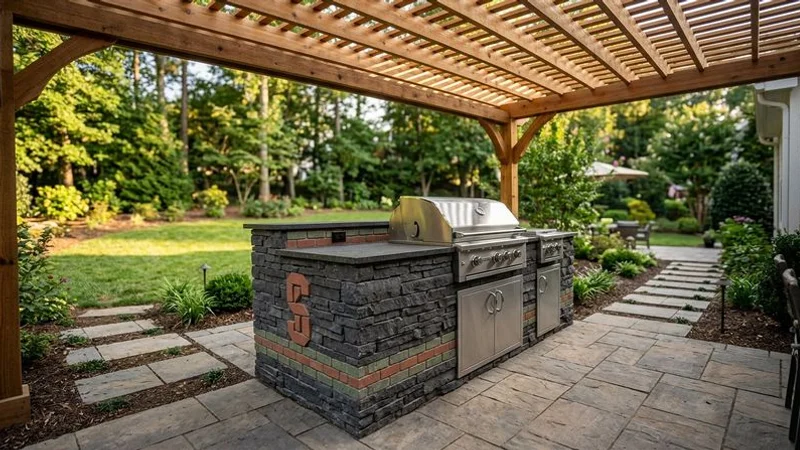
Mistake 1: Ignoring the Work Triangle
We frequently see outdoor layouts that force the cook to run a marathon just to prepare a simple meal. This inefficiency stems from ignoring the classic work triangle concept.
Our designs rely on the National Kitchen and Bath Association guidelines used across the US. The ideal layout positions your grill, sink, and refrigerator at three distinct points.
We structure every leg of this triangle to measure between 4 and 9 feet. This spacing prevents the chef from feeling cramped during meal prep.
| Work Triangle Element | NKBA Measurement Guideline | Practical Benefit |
|---|---|---|
| Individual Leg Length | 4 to 9 feet | Prevents feeling cramped or walking too far. |
| Total Perimeter | 12 to 26 feet | Ensures the entire zone remains highly efficient. |
| Island Clearance | Max 12-inch obstruction | Keeps traffic flowing smoothly around the cook. |
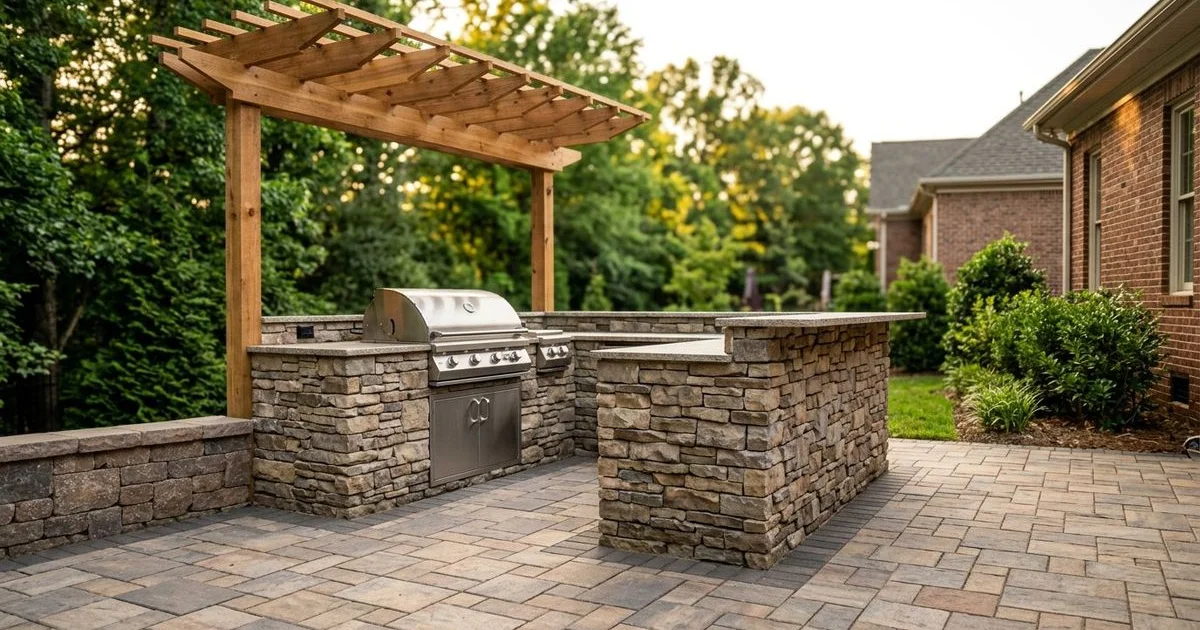
Our designers constantly correct linear layouts that place the grill ten feet away from the prep sink. A 2026 U-shaped or L-shaped layout naturally tightens this space.
We recommend placing under-counter refrigerated drawers directly below your primary prep surface. This simple adjustment keeps ingredients perfectly chilled during humid July afternoons.
Mistake 2: Choosing the Wrong Materials for Charlotte’s Climate
We strongly advise against picking materials based solely on interior showroom aesthetics. Summer in North Carolina is brutal on exterior masonry.
Our local weather data shows that July 2025 brought extreme humidity and average highs around 89 degrees Fahrenheit. These muggy conditions accelerate wear on porous stone and basic metals.
We source materials engineered specifically to survive extreme temperature swings and moisture. This proactive approach prevents premature deterioration.
Countertop Comparisons and Costs
Our technicians see dozens of cracked granite counters every spring after the winter freeze-thaw cycle. Standard granite absorbs moisture if not sealed perfectly every single year.
We lean heavily toward porcelain slabs for outdoor surfaces in 2026. Porcelain costs between $80 and $140 per square foot installed, but it requires zero sealing.
Our preferred materials protect you from costly stain removal and crack repairs down the road. The upfront investment always pays off in longevity.
- Porcelain: Highly UV resistant, non-porous, and zero maintenance required.
- Quartzite: Offers natural stone beauty with superior density compared to basic granite.
- Granite: A classic choice that demands rigorous annual sealing to survive local weather.
Structural and Appliance Materials
We refuse to use painted steel frames because they rust rapidly in the humid Southern air. Concrete block masonry with a stone veneer provides a much safer foundation.
Our appliance specifications always prioritize the correct grade of stainless steel. There is a massive difference between budget metals and true marine-grade options.
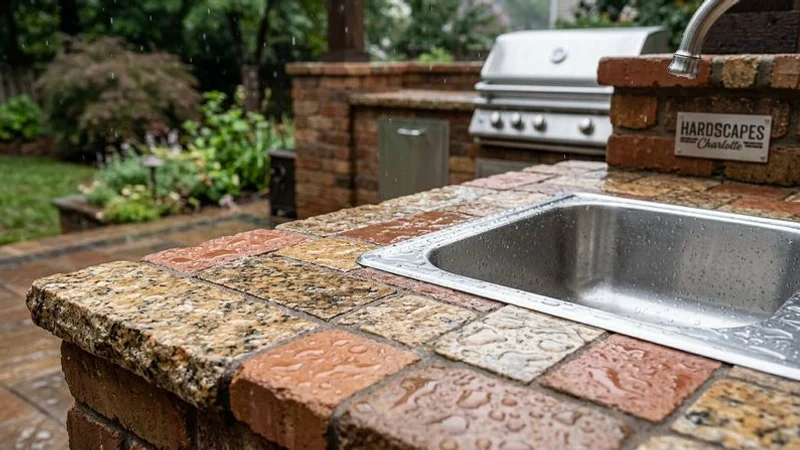
We know that standard 304 stainless steel works well for most applications. Upgrading to 316 stainless adds 2 to 3 percent molybdenum, dramatically increasing resistance to chemical cleaners and salty air.
Mistake 3: Inadequate Ventilation and Smoke Management
Our office often gets calls from homeowners whose covered patios have become choked with grease and smoke. A beautiful roof structure quickly traps dangerous heat and odors.
We treat the outdoor grill ventilation just like a high-powered commercial range. You cannot rely on natural breezes to clear a heavy cloud of burger smoke.
Our designs always feature a mechanical vent hood sized accurately for your specific equipment. This component keeps the seating area completely clear of exhaust.
| Grill Heat Output (BTUs) | Minimum Hood CFM Requirement | Recommended Duct Size |
|---|---|---|
| Up to 60,000 BTUs | 900 CFM | 8-inch diameter |
| 60,000 to 90,000 BTUs | 1,200 CFM | 10-inch diameter |
| 90,000+ BTUs | 1,500+ CFM | 10 to 12-inch diameter |
We calculate the required airflow using a strict rule of 1 CFM for every 100 BTUs of grill output. A standard 75,000 BTU grill demands at least a 750 CFM fan, plus extra power for long duct runs.
Our installers position the grill on the perimeter of the covered structure whenever possible. This simple placement allows prevailing southwest summer breezes to carry residual smoke away from your guests.
Mistake 4: Underestimating Plumbing and Electrical Requirements
We constantly remind clients that skipping utility connections severely limits how a space functions. Carrying dirty dishes back inside defeats the purpose of cooking outdoors.
Our local Mecklenburg County code enforcement mandates strict permits for any plumbing or electrical additions. You cannot safely run an extension cord across the yard to power a rotisserie.
We insist on professional utility planning to prevent expensive driveway trenching after the patio is already poured. This sequence ensures a smooth installation process.
- Licensed Professionals: NC law requires licensed electricians and plumbers for all connection work.
- Safety Outlets: GFCI protection is strictly required for all exterior kitchen receptacles.
- Gas Line Stubs: Inspectors require a minimum of 2 inches of unthreaded gas pipe exposed above the deck.
- Approved Drainage: Sinks must connect to the municipal sewer system instead of draining into the yard.
Our plumbers design proper winterization drain-down systems to protect pipes during freezing nights. Uninsulated water lines will easily burst during a sudden January cold snap.
We allocate 15 to 25 percent of the total project budget specifically for reliable utilities. This upfront investment guarantees your blenders, ice makers, and lighting will work flawlessly.
Mistake 5: Poor Lighting Design
We visit many finished properties that become dark and dangerous immediately after sunset. Preparing raw chicken in the shadows is a serious health hazard.
Our lighting plans eliminate these safety risks by layering different types of illumination. Ambient string lights create a nice mood, but they fail to illuminate a hot grill grate safely.
- Task Lighting: Focused, bright beams directed specifically over the grill and chopping block.
- Ambient Lighting: Softer, general illumination spread across the seating and dining areas.
- Accent Lighting: Low-voltage landscape lights highlighting the stone veneer and nearby pathways.
We mandate dedicated task fixtures shining directly down onto your preparation surfaces. This precise lighting makes evening cooking incredibly easy.
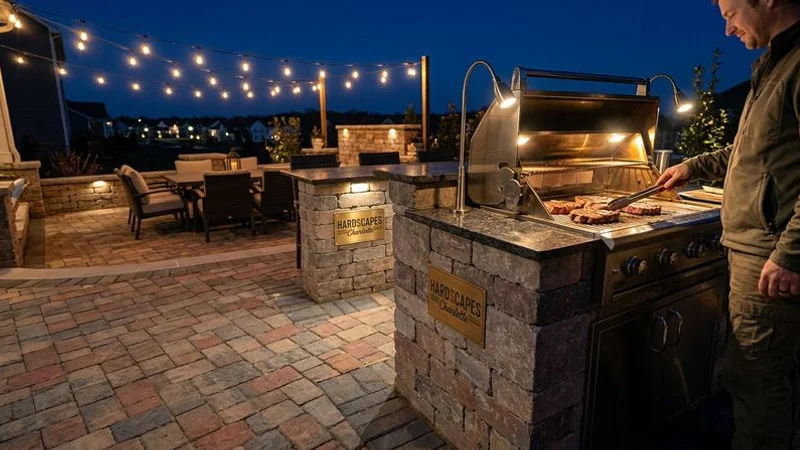
Our electricians install under-counter LED strips to light up cabinet interiors and utility drawers. This ensures you can easily find your tongs or a fresh propane tank in the dark.
We place all task, ambient, and accent lights on separate dimmer switches. This separation gives you complete control over the visual atmosphere as the evening transitions from cooking to dining.
Planning Your Outdoor Kitchen the Right Way
We know that rushing into construction guarantees you will make expensive errors. The initial layout phase is where the most critical financial decisions occur.
Our typical outdoor kitchen installations range from $15,000 for a basic setup to over $75,000 for a premium 2026 configuration. Protecting that capital requires deep knowledge of local US soil, building codes, and material science.
”The difference between a disappointing patio and a high-performance culinary space is decided months before the first brick is laid.”
We follow a methodical approach that pays massive dividends during your first big neighborhood cookout. Avoiding these pitfalls ensures a smooth, stress-free build.
Start Your Outdoor Kitchen Project with Confidence
Our experts welcome the opportunity to guide your next major property upgrade. Reviewing the 5 Outdoor Kitchen Design Mistakes Charlotte Homeowners Should Avoid is the best first step.
Your backyard deserves a space that handles heavy entertaining without constant maintenance headaches.
We handle every detail from the initial blueprints to the final local code inspections. Schedule a design consultation and let us help you build a stunning culinary retreat.