Choosing Between a Koi Pond and a Pondless Waterfall
We often see property owners struggle to choose the right aquatic element for their spaces.
Water features transform US backyards, especially in areas like Charlotte where outdoor living is a year-round pursuit, in ways that few other landscape additions can match.
The sound of moving water and the visual texture of rippling surfaces create genuine tranquility.
A definitive choice between a living ecosystem and a low-maintenance cascade.
Our professional service team has spent years designing and installing both styles across various climates.
Years of hands-on observation have shown us exactly what it takes to keep them thriving.
This brings up the common question of Koi Pond vs Pondless Waterfall: Which Water Feature Is Right for You?
We will break down the 2026 data, review what these features actually require, and explore a few practical ways to decide which path fits your lifestyle.
The Koi Pond Experience
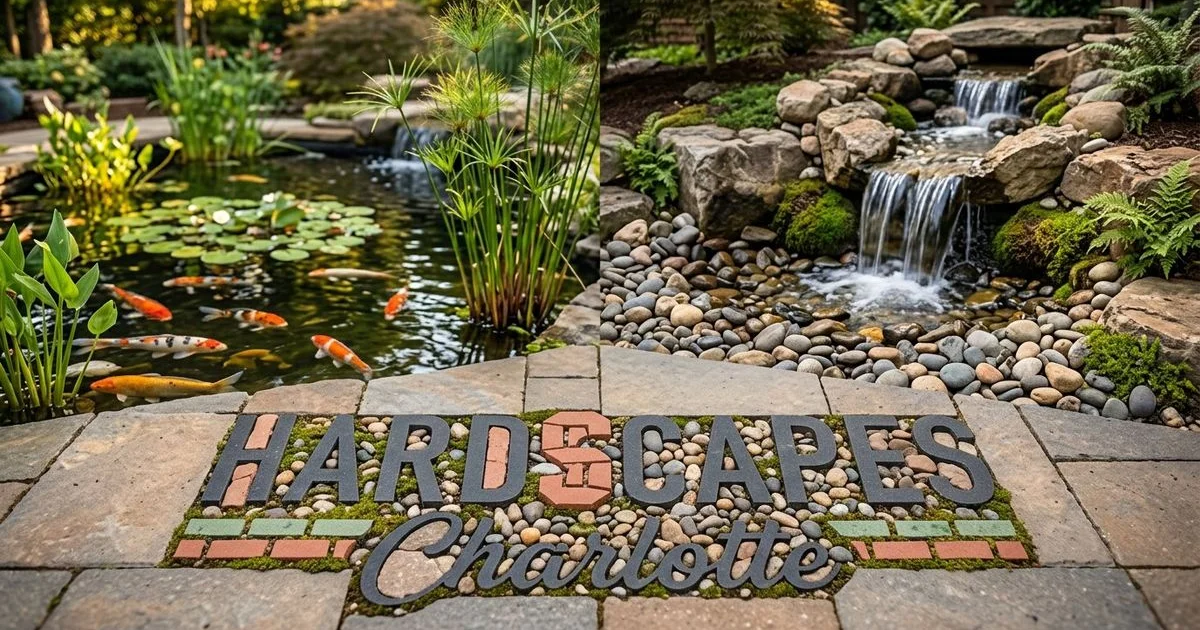
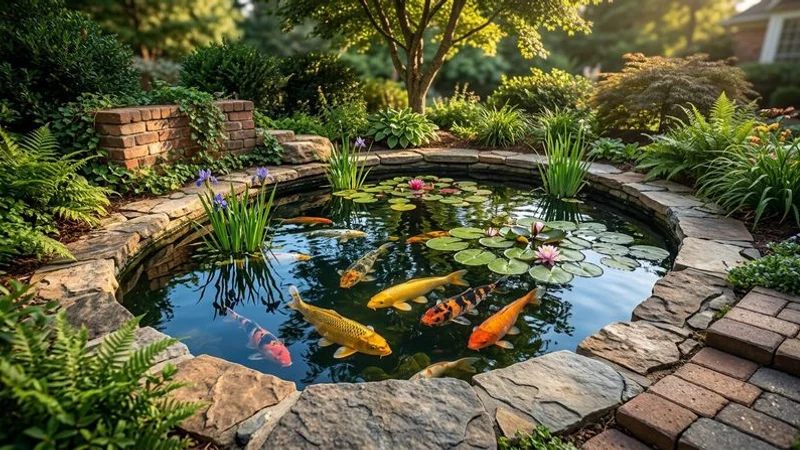
A koi pond operates as a complete aquatic ecosystem.
Standing water depths typically range from eighteen inches to three feet, providing a home for popular koi varieties like Kohaku or Sanke.
Our designers always recommend incorporating specific aquatic plants, such as Water Hyacinths and Hardy Water Lilies, to aid in natural filtration.
These plants actively pull excess nitrogen from the water, reducing the likelihood of algae blooms.
The environment evolves through the seasons, offering a different character in spring, summer, fall, and winter.
We frequently hear clients describe the meditative quality of sitting beside their ponds and watching the fish glide.
Koi are remarkably personable fish that learn to recognize their owners and come to the surface for feeding.
This dynamic visual impact makes a well-designed pond the centerpiece of any landscape.
The Appeal of Koi Ponds
Our installations often incorporate natural Tennessee fieldstone edging to blend the basin seamlessly into the surrounding environment.
Recent 2026 data from the National Association of Landscape Professionals highlights that water features rank among the top requested backyard upgrades for stress reduction.
Frogs, dragonflies, and local birds naturally gravitate to the water, creating a micro-habitat that connects your property to the natural world.
We love seeing how these installations provide a small but meaningful ecological contribution in developing Charlotte suburban neighborhoods.
The reflective surface creates depth and dimension that static landscape elements simply cannot match.
You can even add a cascading stream to feed the main basin, introducing the soothing auditory benefit of moving water.
Koi Pond Maintenance Realities
Our crews must emphasize the specific upkeep requirements, as these living features demand genuine commitment.
Filtration serves as the absolute backbone of a healthy aquatic environment.
A proper setup requires mechanical filters to catch solid debris, plus biological filters to process the toxic ammonia that fish naturally produce.
We install high-capacity bead filters to handle this biological load effectively.
Water chemistry monitoring represents another non-negotiable task.
The exact requirements follow a predictable, continuous pattern.
- Strict Water Chemistry Control: Maintaining the ideal pH level tightly between 7.0 and 8.6.
- Crucial Chloramine Neutralization: Treating municipal tap water with a dedicated neutralizer like API Pond Stress Coat to remove highly toxic chemicals before topping off the basin.
- Summer Temperature Management: Adding supplemental aeration systems to keep oxygen levels safe when temperatures exceed 80 degrees and algae growth accelerates.
- Consistent Seasonal Routines: Starting up pumps in spring, netting leaves in fall, and ensuring gas exchange holes stay open through winter ice.
Our technicians always warn property owners about ignoring these strict parameters.
A single misstep with US municipal tap water or Charlotte summer temperatures will cause severe ecosystem damage.
Every maintenance task plays a vital role in keeping the delicate environment balanced.
Koi Pond Costs
Our estimating team tracks installation prices closely to provide accurate budgeting advice.
Current 2026 data shows the national average cost to build a mid-sized koi pond sits around $10,500, which holds true for the Charlotte market.
Most standard installations range from $5,100 to $15,900, depending heavily on size, depth, and the complexity of the filtration system.
We advise a baseline capacity of at least 1,000 gallons of water volume to maintain a stable environment for adult fish.
High-end custom projects with premium stonework and advanced UV clarifiers can easily push toward $25,000.
Ongoing annual expenses are another crucial financial factor to consider.
Our maintenance plans suggest budgeting between $1,000 and $2,000 yearly for routine upkeep.
This covers electricity for continuous pump operation, quality fish food, water treatments, and routine equipment replacements.
The fish themselves range from $15 for domestic juveniles to several hundred dollars for imported, show-quality breeds.
The Pondless Waterfall Experience
We frequently recommend this alternative for clients who want sensory benefits without the biological upkeep.
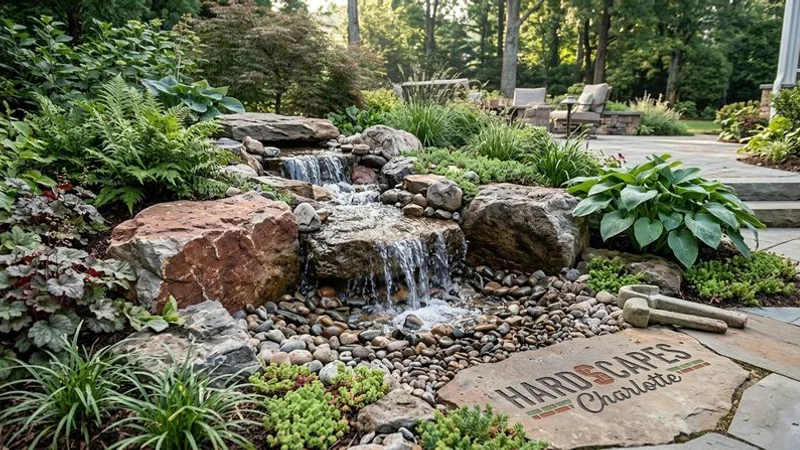
A pondless waterfall delivers the auditory and visual experience of flowing water but entirely eliminates the standing basin.
Water cascades over natural stone into a concealed, gravel-filled reservoir built using modular storage units like AquaBlox.
Our installation process involves hiding a heavy-duty pump at the bottom of this basin to recirculate water back to the top of the falls.
The water stays in constant motion, providing the atmospheric charm of a stream without accumulating in a visible pool.
This closed system simplifies ownership dramatically.
The Appeal of Pondless Waterfalls
We see immense value in the sheer spatial flexibility of these designs.
Recent 2026 architectural trends show a massive shift toward cascading water features that act as focal points without dominating the yard.
Safety stands out as another significant advantage for families.
Our clients with young children or pets prefer this option because the absence of deep standing water eliminates drowning risks.
Space efficiency provides a highly practical benefit for modest suburban properties.
A high-impact feature requires an area as small as four by six feet.
We can tuck these waterfalls into unused corners, build them along retaining walls, or integrate them beside entryways.
The hidden basin occupies very little visual real estate, leaving the rest of the property open for other uses.
This versatility solves many design challenges on properties with steep terrain or limited flat ground.
Pondless Waterfall Maintenance
Our maintenance crews find that the upkeep requirements here are dramatically simpler than managing a living ecosystem.
There are no fish to feed, no strict pH levels to balance, and no complex biological filters to clean.
The primary manual task simply involves checking the underground reservoir level.
We remind owners that summer evaporation can easily claim one to two inches of water per week.
Installing an automatic fill valve connected to your irrigation system completely eliminates this manual chore.
Modern asynchronous pumps handle the continuous flow efficiently, and you can simply shut the system down during the coldest winter months or occasional Charlotte ice events.
- Autumn Debris Removal: Pulling leaves from the pump filter basket a few times during peak foliage.
- Annual Basin Flush: Rinsing the gravel basin once a year to clear out accumulated sediment.
We consider that brief annual cleaning to be the bulk of the required physical labor.
This closed-loop system truly redefines outdoor convenience.
The straightforward design saves property owners countless hours over the lifespan of the feature.
Pondless Waterfall Costs
Our estimators track these specific installation metrics to ensure our quotes align with current market realities.
In 2026, the national average cost for a professionally installed pondless waterfall sits around $7,000.
Most standard projects fall into the $4,000 to $10,000 range, depending heavily on the stream length and stone selection.
We build entry-level designs, featuring a modest three-foot drop and natural boulders, usually starting near $4,000.
Multi-tiered cascades spanning ten feet or more will push the investment closer to $15,000.
Operational expenses stay remarkably low over the life of the feature.
Our data shows electricity for the recirculating pump costs roughly $10 to $30 per month.
Total annual maintenance expenses rarely exceed $300, making this a highly economical way to enjoy moving water.
The reduced need for specialized cleaning chemicals keeps long-term ownership highly affordable.
Head-to-Head Comparison
We always encourage property owners to weigh these specific factors side-by-side.
Both choices offer unique benefits, but their daily impacts on your routine vary wildly.
A quick breakdown clarifies exactly what each installation demands.
| Factor | Koi Pond | Pondless Waterfall |
|---|---|---|
| Maintenance Time | 30-60 minutes weekly (feeding, filter cleaning, testing). | 15 minutes monthly (checking water levels, clearing debris). |
| Space Required | Minimum 50 sq ft (1,000+ gallons) for healthy fish. | Highly compact; works in spaces as small as 20 sq ft. |
| Safety Profile | Open, deep water requires supervision for kids and pets. | Zero standing water; inherently safe for families. |
| Operating Costs | $1,000 - $2,000 annually (electricity, food, treatments). | $150 - $300 annually (basic pump electricity). |
| Property Value | Mixed impact; appeals to niche buyers, deters others. | Universally positive; seen as low-stress landscaping. |
Making Your Decision
Our final piece of advice stems from an honest assessment of your actual lifestyle and available free time.
The right choice depends entirely on your budget, your maintenance tolerance, and how you plan to use the yard.
A living ecosystem requires an owner who genuinely enjoys the daily ritual of feeding fish and testing water chemistry.
We suggest the biological route only for hobbyists who view the upkeep as a relaxing outdoor activity rather than a chore.
The low-maintenance cascade is perfect if you frequently travel or simply want sensory benefits without adding tasks to your schedule.
Both options completely deliver the soothing sound of moving water and enhance the visual appeal of your property.
Let Us Help You Decide
Our design professionals would be glad to visit your Charlotte property, assess the terrain, and outline the best possibilities.
Every landscape holds unique potential for a stunning aquatic addition.
A professional evaluation ensures you get the right scale and style for your architecture.
We are ready to map out a custom plan that fits your exact needs.
Expert guidance guarantees a seamless installation process.
Simply Schedule a design consultation to start the conversation about bringing the beauty and tranquility of water to your outdoor living space.
A beautiful yard retreat is closer than you think.