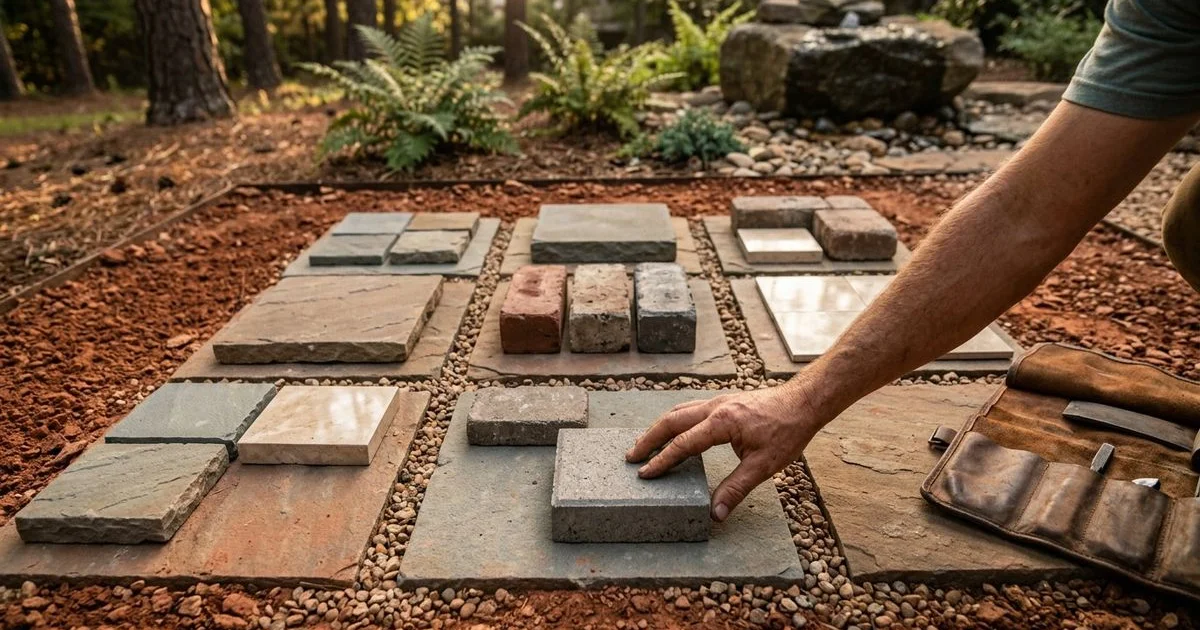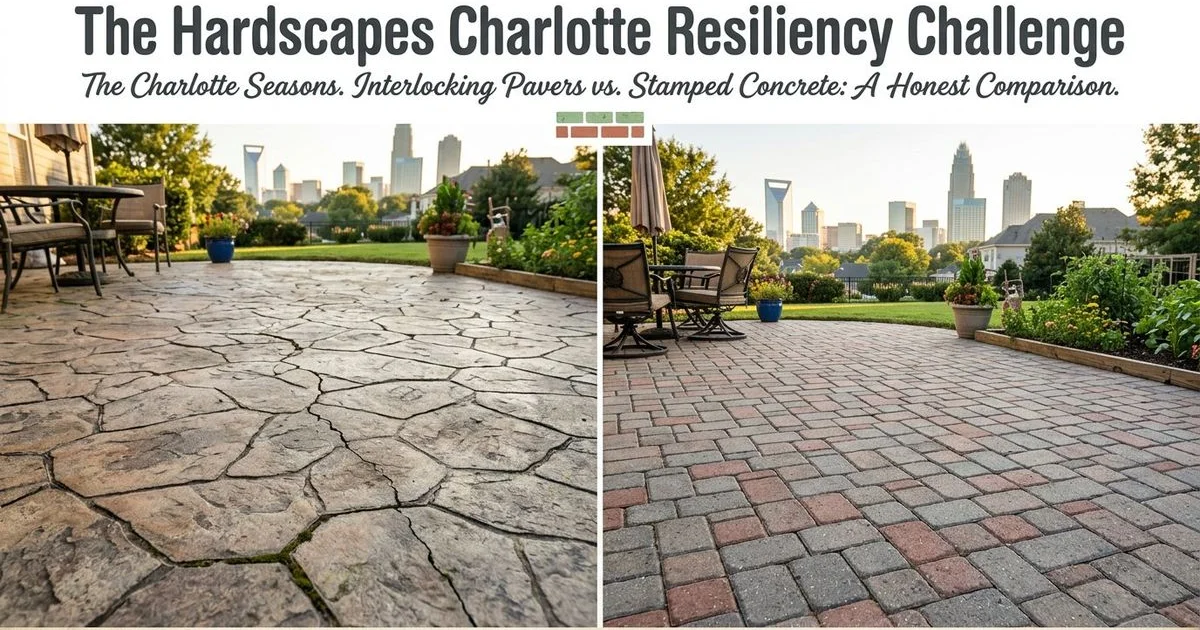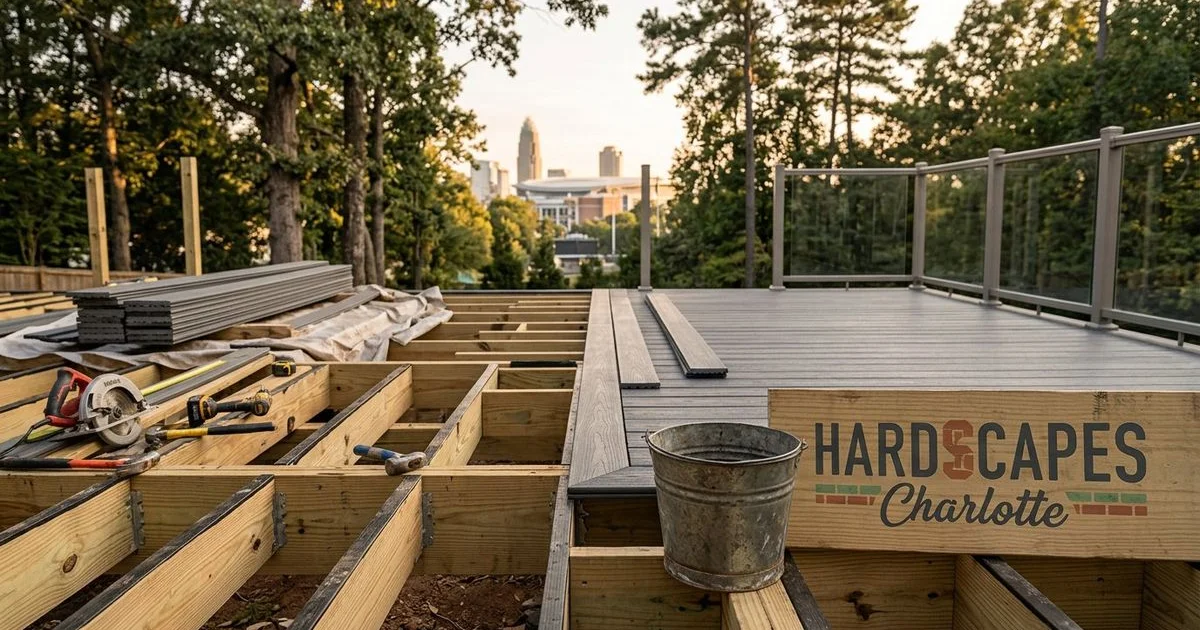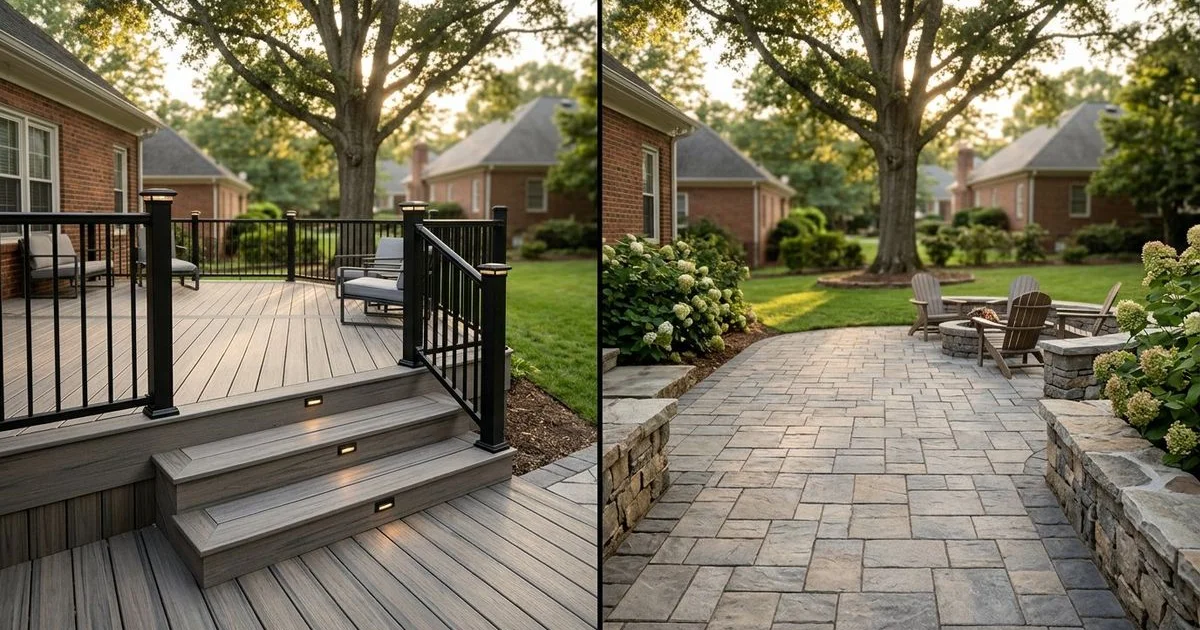
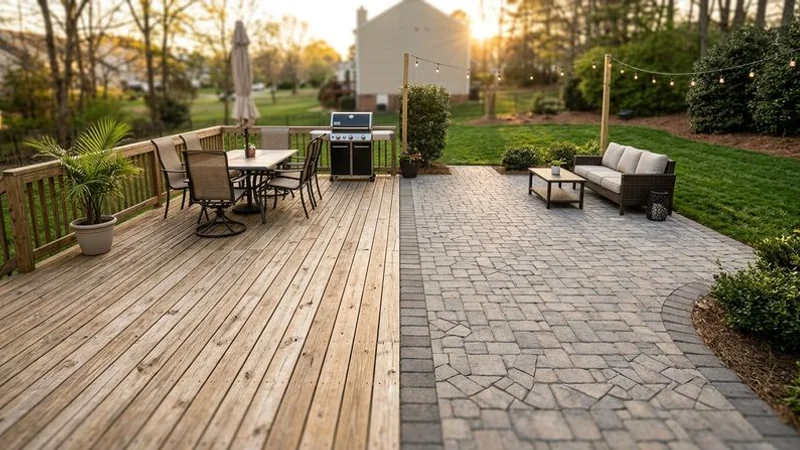
You know how one neighbor’s stunning elevated deck looks completely out of place on the flat lot next door. That visual clash perfectly illustrates why answering the question of Deck vs Patio: Which Is Better for Your Charlotte Backyard? must be customized for the specific property.
We see this constant struggle in our design consultations across the region. Matching a structure to your specific Charlotte lot is the difference between a functional oasis and a costly mistake.
The latest numbers show that outdoor renovations drive incredible resale value. From what we have seen, the right choice depends heavily on your specific topography and how you plan to use the space. A beautiful design in Dilworth might fail entirely on a sloping property near Lake Norman.
Our team wants to break down the exact variables that dictate a successful build. Let’s look at the data, what it actually tells us, and explore practical ways to respond.
Cost Comparison: The Numbers That Matter
The financial commitment required for outdoor living spaces goes far beyond the initial quote. You have to evaluate the long-term carrying costs to make an informed choice. Our project managers always advise clients to factor in maintenance and local taxes right from the start.
Initial Installation Costs
A paver patio in Charlotte typically costs $12 to $25 per square foot installed. This puts a standard 300-square-foot project in the $3,600 to $7,500 range. Upgrading to premium materials like Techo-Bloc pavers or natural North Carolina bluestone pushes that price to $20 to $40 per square foot.
Decks require a larger upfront investment, especially when using modern materials. Pressure-treated wood starts at $15 to $25 per square foot. Upgrading to composite options pushes the price to $25 to $50 per square foot.
Recent 2026 data from Angi places the average cost to build a deck in the Charlotte area at $6,635. Your total will vary based on size and framing complexity. We always remind clients to include the local 7.25% sales tax in their initial material budget to avoid surprises.
For a complete breakdown, see our patio cost guide for Charlotte and our deck cost guide for Charlotte.
Long-Term Cost of Ownership
The initial price gap narrows significantly when you calculate decade-long maintenance requirements. Pressure-treated wood requires annual staining and sealing to survive the humid southern summers. Hiring a professional for this service costs between $800 and $1,500 every single year.
Our maintenance records show that these recurring costs often exceed the original construction price over a 15-year period. Composite boards eliminate the staining requirement, making their long-term cost profile highly competitive with ground-level hardscapes.
Paver systems remain the most economical option over a 20-year horizon. They require only modest maintenance like joint sand replenishment and optional sealing every three to five years.
| Material | Annual Maintenance Cost | Required Upkeep |
|---|---|---|
| Pressure-Treated Wood | $800 - $1,500 | Yearly staining and sealing |
| Composite Boards | $10 - $50 | Basic soap and water cleaning |
| Paver Patios | $100 - $300 | Joint sand refill and periodic sealing |
Return on Investment
Hardscape and carpentry additions both add serious equity to your property. The 2025 Cost vs Value Report for the South Atlantic region highlights a massive surge in outdoor project returns. A composite deck addition now recoups an astonishing 97.8% of its job cost at resale.
Wood deck additions also perform exceptionally well in the current real estate market. Patios are slightly harder to isolate in resale data because they often blend into larger landscaping packages. Our regional sales data indicates that premium hardscape features generally return 50 to 80 percent of their cost.
Buyers simply want functional, well-built outdoor spaces. A carefully designed stone surface will easily outperform a poorly constructed wooden structure at the closing table.
Deck vs Patio: Which Is Better for Your Charlotte Backyard? The Deciding Factors
Your lot conditions often dictate the most logical path forward before you even look at material samples. Ignoring the natural slope and soil composition of your yard leads to structural headaches. We always start our site visits by assessing the ground itself.
When a Deck Makes More Sense
Carpentry shines when your home features specific elevation challenges. Consider a raised platform if you have:
- A walk-out basement or raised foundation
- A steeply sloped backyard
- Mature tree roots near the house that cannot be disturbed
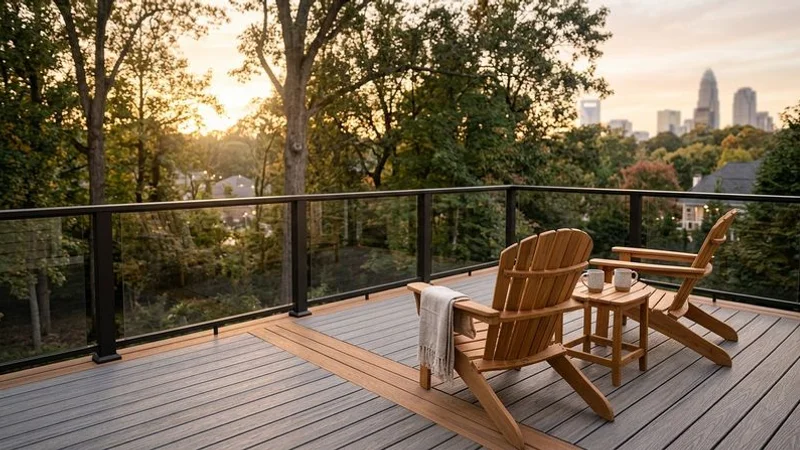
Stepping directly outside at the same elevation provides a flow that ground-level pavers cannot match. Building a flat stone surface on a steep hill requires extensive retaining walls and thousands of dollars in fill dirt. A raised platform simply spans across the drop-off, creating an elevated vantage point with beautiful views.
Local building codes play a massive role in this design phase. Mecklenburg County regulations require a permit and safety railings for any structure built more than 30 inches above grade. We handle these permitting details daily to ensure every build remains fully compliant and safe.
When a Patio Makes More Sense
A ground-level hardscape is the ideal solution if your house sits flush with a relatively flat backyard. It delivers maximum usable square footage per dollar while feeling like a natural extension of the lawn. You avoid the need for structural posts and complicated stairway framing.
Charlotte properties are famous for their native Cecil soil. This highly expansive red clay shifts considerably as moisture levels change throughout the year. Our installation crews dig down 4 to 6 inches to lay a heavily compacted gravel base, which prevents the pavers from heaving or sinking in the clay.
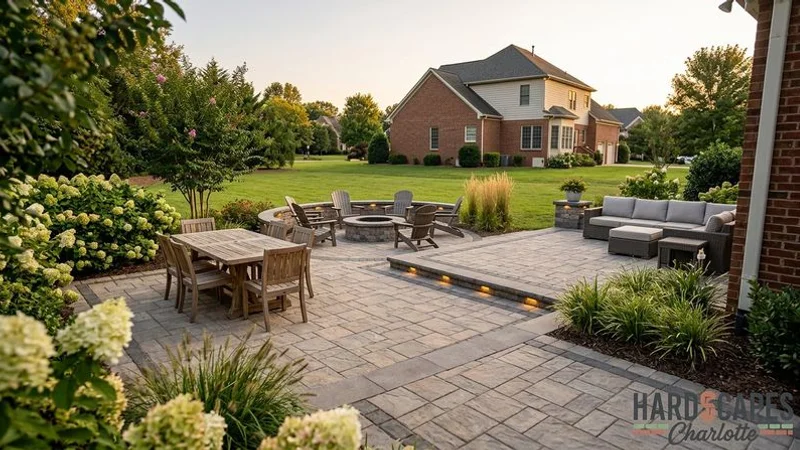
Hardscapes excel for heavy-use entertaining spaces that require maximum load capacities. Stone surfaces effortlessly support the massive weight of masonry fire pits and large groups of people. A flat yard practically begs for this type of sprawling, unrestricted design.
Durability in Charlotte’s Climate
Southern weather patterns test exterior materials in very specific ways. You have to select products that handle intense sun, heavy rain, and winter frosts. Our product warranties are structured around surviving these exact environmental extremes.
Heat and Sun
Summers here bring extended exposure to intense UV radiation. The region averages around 44 days above 90 degrees each year, turning unshaded surfaces into ovens. Wood requires heavy UV-protective stains to prevent aggressive graying and splitting under this constant heat.
Composite boards resist fading beautifully, but they absorb and hold thermal energy. Darker synthetic boards can reach surface temperatures over 140 degrees in direct afternoon sunlight. We strongly recommend choosing light-colored synthetic options, like silver or ash, which reflect sunlight and stay noticeably cooler under bare feet.
“During Charlotte’s peak summer heat waves, choosing a light-colored composite board can keep the surface up to 20 degrees cooler than dark brown alternatives.”
Stone surfaces generally perform better during peak heat waves. Pavers stay cooler than dark plastics, though they still absorb some thermal energy.
Rain and Moisture
Moisture management is a critical consideration for any outdoor build. The area receives roughly 43 inches of annual rainfall, which can quickly rot unprotected framing. Wooden boards allow water to drain through the gaps, but this creates a muddy mess underneath the structure.
Modern engineering offers brilliant solutions for this runoff problem. Installing an under-deck drainage system, like Trex RainEscape, catches water and channels it into gutters. Our installation teams frequently use these systems to create a completely dry, usable storage room below the main floor.
Pavers handle heavy downpours effortlessly when installed with a proper 1-inch to 10-foot slope. The flexible joints between the stones allow for natural percolation directly into the sub-base. Permeable interlocking systems can eliminate standing puddles entirely.
Freeze-Thaw Cycles
Winter weather brings an average of 40 to 60 freeze-thaw cycles annually. Temperature swings force wooden joists to expand and contract constantly. This microscopic movement slowly loosens galvanized fasteners and causes floorboards to squeak.
Synthetic boards possess lower thermal expansion rates, but they still show minor gapping at the butt joints during severe cold snaps. Hardscapes handle these fluctuating temperatures exceptionally well.
The secret lies in the joint material used between the stones. We sweep high-quality polymeric sand into the crevices, which flexes and moves with the ground rather than cracking like solid concrete. This flexibility makes interlocking stones vastly superior to poured cement slabs in this region.
Lifestyle and Usage Considerations
Beyond the physical constraints of your yard, you must analyze how you actually intend to live in the space. The right layout makes daily routines and weekend parties infinitely more enjoyable. We focus heavily on traffic flow and appliance placement during the drafting phase.
Entertaining
Ground-level spaces offer a massive practical advantage for hosting large gatherings. You never have to worry about weight limits, bouncing joists, or bottlenecks near narrow staircases. The open borders allow guests to spill out onto the adjacent lawn naturally.
Elevated platforms create a much more defined, intimate setting for dinner parties. Sitting high above the tree line provides an impressive backdrop for evening cocktails. You do have to plan your furniture layout carefully to keep the stairs and exit points clear.
Standard residential framing is designed to support a 40 psf (pounds per square foot) live load. This easily handles standard furniture and a moderate group of guests. Our engineers always verify that the structural design matches your anticipated entertaining style.
Cooking and Dining
Outdoor cooking upgrades completely change the structural requirements of your project. Patios are naturally suited for outdoor kitchens because the ground easily supports heavy stone countertops. Gas lines and water pipes run safely underground, keeping them hidden and protected from freezing.
Putting a full kitchen on a raised platform requires serious structural reinforcement. A built-in grill island with concrete counters can add 15 to 20 psf of dead weight to a specific area. We often upgrade floor joists and install steel helical piles to support these heavy appliance loads safely.
| Outdoor Feature | Estimated Live Load Requirement |
|---|---|
| Standard Dining Furniture | 40 psf (Standard deck rating) |
| Hot Tub (Filled) | 100+ psf |
| Masonry Outdoor Kitchen | 60 - 80 psf |
You must plan these utility runs before the framing begins. Retrofitting gas pipes through existing joists is a costly and time-consuming process.
Fire Features
Fire features extend your outdoor season deep into the autumn months. A masonry fire pit sits perfectly on a stone surface, creating a gorgeous focal point surrounded by lounge chairs. These built-in masonry circles are the most requested feature from our local clients.
Putting flames on a combustible wooden floor requires extreme caution and careful planning. Wood-burning pits are a massive hazard and should never be used on wooden or synthetic flooring due to stray embers.
Gas fire tables are a fantastic, safe alternative for elevated spaces. You just need to ensure they have the proper heat shields and clearance from the railings. For more details on safe heating options, read our fire pit vs outdoor fireplace comparison.
Relaxation and Daily Use
Think about the sensory experience of your morning routine. Stepping out with a coffee to feel warm, textured stone underfoot is a very grounding way to start the day. Sitting elevated above the yard provides a totally different, breezy perspective.
Pool owners almost universally benefit from hardscaping around the water. We install travertine or textured concrete pavers because their slip-resistant finish is critical for wet feet. These porous materials also stay comfortable to the touch during peak afternoon swimming hours.
The Hybrid Approach: Why Not Both?
The most striking properties often combine both elements into a unified, tiered living space. A common layout features an elevated platform connected to the main floor, with wide stairs cascading down to a sprawling stone terrace. This tiered approach gives you the ultimate flexibility for dining up high and lounging down low.
We love designing these dual-zone layouts for gently sloping lots. The upper level serves as the primary dining zone right off the interior kitchen. The lower level hosts the fire pit, spa, or garden lounge area away from the house.
The combined budget for a modestly sized upper tier and a complementary lower terrace is often comparable to building one massive, over-engineered platform. This hybrid strategy maximizes every square inch of your property’s potential.
Making Your Decision on Deck vs Patio: Which Is Better for Your Charlotte Backyard?
Choosing between these two incredible options boils down to your specific property constraints and lifestyle goals. An elevated build is perfect if your back door sits high above a sloping lawn. It provides gorgeous views and a seamless transition from your interior rooms.
A ground-level stone terrace is the winner for flat yards and heavy entertainment features. You get maximum square footage and bulletproof durability for heavy outdoor cooking equipment.
A hybrid design offers the absolute best of both worlds. It solves complex elevation changes while giving you distinct zones for dining and relaxing.
Let Us Help You Decide
The smartest way to finalize this decision is to have a seasoned professional evaluate your exact yard. We design and build both options, meaning our advice is based purely on what works best for your home. Identifying hidden property challenges and highlighting missed opportunities is exactly what experts do.
Reach out today to schedule a free design consultation with our Charlotte outdoor living specialists. We will walk your property, run the numbers, and help you finalize the perfect blueprint for your backyard.